
Online or in-store? Buying online saves time and effort, but can you really trust the website www.GetCheapRingsYEAH!.com… and what will your fiancée think when she finds out that’s where it came from? And as for the “brick and mortar” stores, how do you know they’re not going to detect your ignorance, smooth-talk you, and jack up the price while complaining about how you’re getting too good of a deal?
Both options can work. Both can be safe. Here’s how they compare to each other.
Buying Online: Pros
You can’t beat the selection and it’s easy to compare diamonds from different merchants. You don’t have to deal with pushy salespeople (in fact, online merchants like such as Blue Nile, are known for their customer service.)
Plus, since these merchants don’t hold as much (or any) inventory and save on overhead, you can (generally) find lower prices than in a physical store.
Assuming you’re shopping from a major player (i.e. not www.GetCheapRingsYEAH!.com), they usually have solid refund policies.
(Tip: before you buy, check the fine print and make sure the store offers a full refund by your method of payment, not just an exchange, and that they don’t charge bogus “restocking fees.”)
Buying Online: Cons
The internet is, well, the internet. It’s a vast unregulated marketplace with good and bad merchants selling good and bad diamonds. If you don’t understand how to tell the difference—or if you don’t consult an expert who does—you can make a terrible (and expensive) decision.
Most online stores simply list the inventory that their wholesalers are holding. These are posted to their site in a giant electronic download. The store does not edit or quality control the stones—they usually don’t ever see them or take possession of them.
So what sort of diamonds are in the wholesale inventory? Tons, both good and bad. It’s also possible you might see the same diamond listed on competing sites.
What about customer testimonials or online ratings?
With other purchases, it’s easy to use customer testimonials as a barometer of quality. On Amazon, for instance, if 500 users give a product an average rating of 4.7 stars, chances are it’s a good bet.
Diamonds are a different story. Each one is unique. The product itself can’t be rated by customers, only the merchant.
So you can look for a highly rated merchant. But let’s face it—do you even trust the people rating the store? When it comes to diamonds, most people don’t know what they’re looking at…and wouldn’t know if they got a good value.
More importantly, a diamond’s internal characteristics, which the naked eye can’t see, drive a tremendous amount of the stone’s intrinsic value and durability.
So a legion of satisfied customer testimonials might help qualify the diamond seller as a reputable merchant (i.e. they ship on time, they accept refunds), but it’s no guarantee that your individual diamond is the best one that you could have bought for the dollar.
Another disadvantage of online merchants: Not seeing the stone. A diamond on its own always looks great. Diamonds need to be compared and contrasted for the average person to form an opinion about whether one is more pleasing to the eye than another.
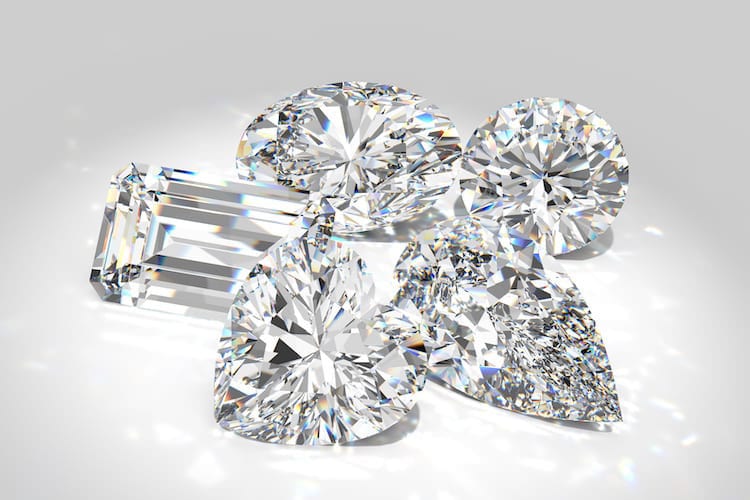
Online stores don’t let you compare and contrast diamonds to understand the tradeoffs or to assess the beauty of the diamond (yes there is “art” as well as “science” at play). This is especially true for diamonds that are fancy shapes. With pear shapes, for example, you need to see if you like a long thin pear, short fat pear, etc. And many fancy shape diamonds exhibit a”bow tie reflection” that only your eye can decide if it’s offensive or not.
A few final disadvantages of buying a diamond online: you’re at the mercy of the information they provide you. They toss around terms like “ideal diamonds” even though they might not be ideal. They could give you a grading report that’s not one you should trust (click here for more on grading reports). And, generally, they don’t offer a longer-term relationship for extremely important “after sale” services: things like sizing, cleaning, tightening, and upgrading.
Buying Online: How To Work The Channel
[Phew.] That’s a long, loooong list of “Cons” for online shopping. That doesn’t mean we don’t recommend it, however. Like rock climbing, hang-gliding, and sex, the key is to do it safely. There are two ways to do this:
1. Go from offline to online. First shop retail for shape, color, clarity, size (this only works if you are shopping for diamonds with independent lab reports confirming the store’s specifications), then go online comparing like-grading reports for best price. True, this is more time consuming then just firing up your browser and shopping.
2. As mentioned above, look for a good refund policy that offers your money back however you originally paid, not just an exchange, with no restocking fees. And make sure you get a good, trustworthy grading report.
Looking for the right engagement ring? We’ve got you covered.
Buying Retail: Pros
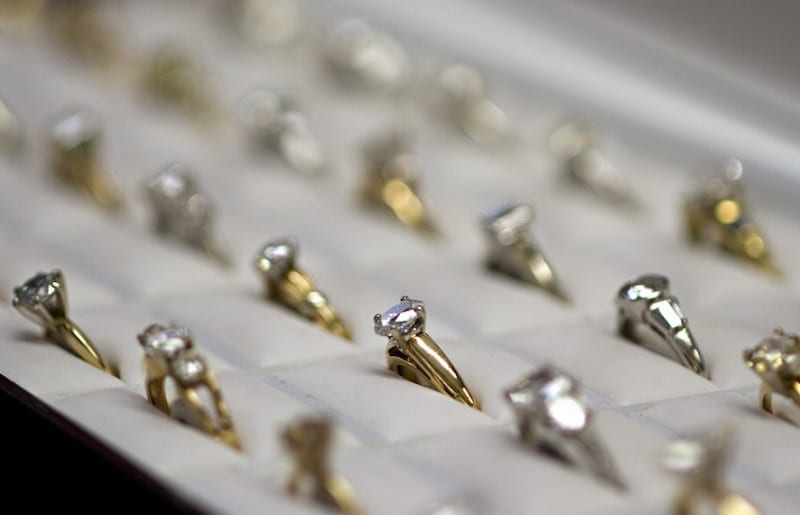
There’s no substitute for seeing the diamond in-person. A great store will show you lots of different options in your price range and educate you on the tradeoffs to be made amongst the Four C’s. With guidance you can find a great diamond that you connect with. (Yes, “connect with.” This is your new life. Just go with it, okay?)
Plus, you can get immediate gratification and walk out of the store with the diamond in your pocket.
Additionally, you’ll often find better credit plans for long-term financing and you might find stores with buy-back or upgrade policies (which allow you to trade-in or trade-up the diamond at some point in the future).
Finally: diamonds are the hardest substance on the planet, but they require maintenance. When you start a relationship with a physical store you’ll have someone to go to for sizing, cleaning, and prong tightening.
Buying Retail: Cons
We know many diamond salespeople, so this isn’t meant as an insult… but the terms “diamond salesperson” and “diamond expert” should not be used interchangeably. At most stores, the primary goal is not to educate you but to sell. And many of the salespeople themselves, surprisingly, aren’t as well-informed as you’d expect. You can be misinformed and misled, both intentionally and unintentionally.
Another disadvantage is the classic problem with retail: overhead. More employees, more inventory, more rent, more electricity, more money out of your pockets. Regarding inventory, if the store is “bought-in” at a high price they might not have marked their inventory to market. In some years diamond prices fall along with all other asset classes.
And finally, while the store’s reputation is a good yardstick for overall quality, it’s no guarantee that the diamond itself is the right one for you. Think of it like clothes. Even glitzy brands like Marc Jacobs, Prada, and Louis Vuitton make clothes that look ugly on certain people.
Buying Retail: How To Work The Channel
Your first move: ask around. Talk to anyone—friend, mother, co-worker—who has recently bought jewelry. Ask for recommendations and references. Go to the best store you can find in your market in the following order of preference: independent family-owned jewelers, large free standing chains (e.g., Jared), mall-based chain stores, department stores.
But here’s your key move: find your best choice in a physical store, then shop online for like diamonds with grading reports from independent labs, then use the price you find online to negotiate with the store. It’s amazing what a little leverage can do. In order for this to work, of course, you’ll need a good grading report—both for the in-store and online diamonds (click here for the basics on grading reports).
To learn how to protect your investment read Engagement Ring Insurance: Infrequently Asked Questions.